
As someone who considers themselves a diehard Metroidvania fan, I’ll admit that we hold pretty high standards. Even though it can be hard to put into words exactly what constitutes a great Metroidvania, we usually know them when we play them.
Unfortunately, those high standards can often lead us to ignore Metroidvanias that don’t receive pristine and near-perfect scores. But the truth is, there are plenty of badly reviewed Metroidvanias that are still totally worth your time.
None of the games on this list garnered anywhere past an 80% positive score on OpenCritic. They might not nail the platforming 100% or be a bit on the linear side. They could have a deep story with predictable gameplay. But overall, they manage to buck the aggregate scores they receive and entertain us regardless.
So take off your judgmental glasses, get comfortable, and let’s talk about some badly reviewed Metroidvanias that are pretty darn good.
10
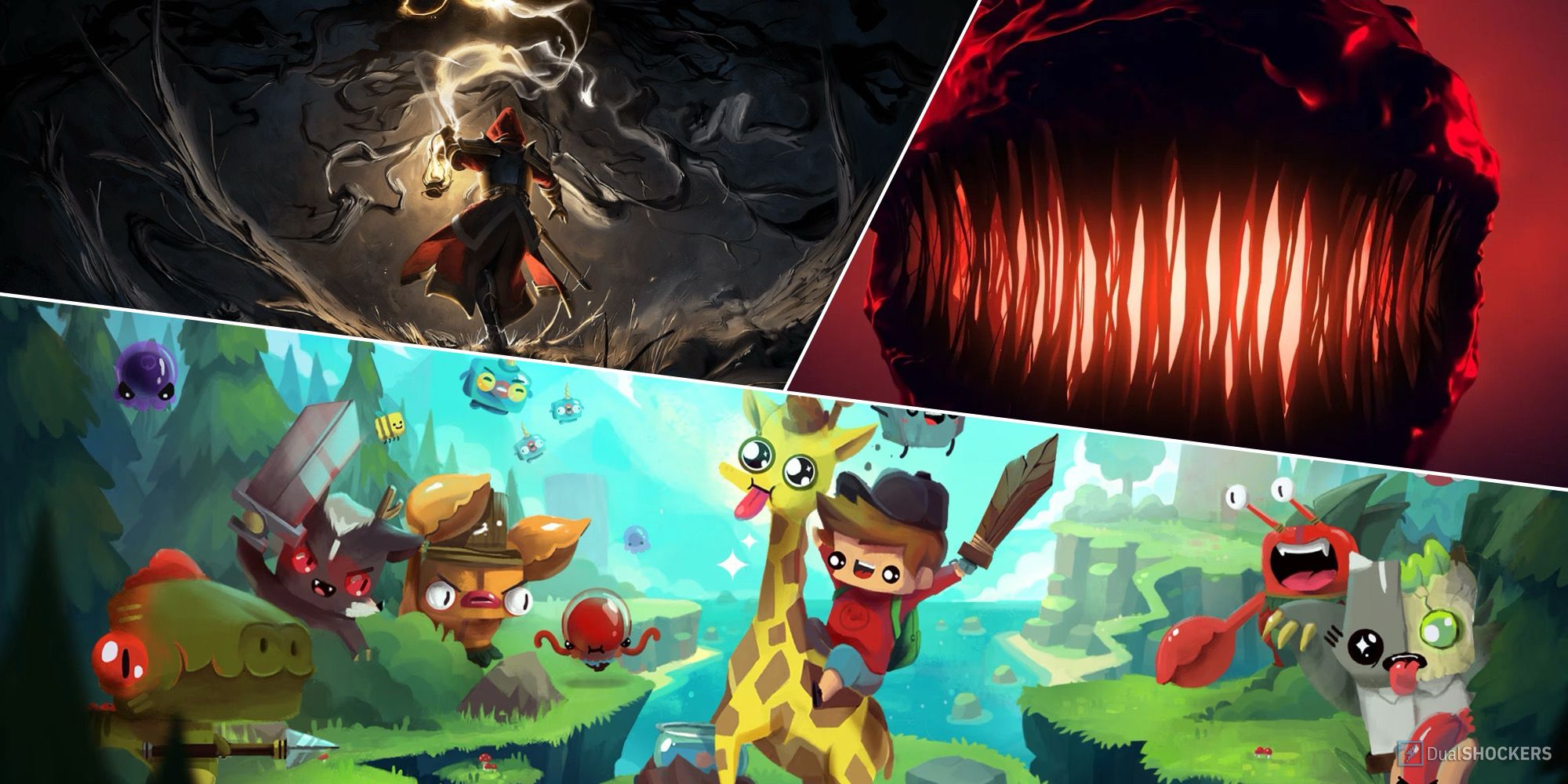
The Last Case of Benedict Fox
OpenCritic Score – 67
First, let’s talk about what The Last Case of Benedict Fox got right. This isn’t just a Metroidvania, but a macabre one with Lovecraftian themes everywhere you look. It’s also a bit of a murder mystery, with a protagonist tethered to a wily demon.
That right there is a pretty great start, and the game doesn’t disappoint as far as visual design. The areas where the game falls a bit short were the uneven combat and the amazing yet sometimes painfully complex puzzles to solve.
Perhaps the coolest thing about the game is jumping into the minds of the recently deceased to gain their testimony, which is utterly unique in the genre as far as I’m concerned.
Still, this is an enjoyable and dark Metroidvania that does a pretty good job of distinguishing itself stylistically. If you can look past the weaker areas, then you’ll find a lot to enjoy here.
9
INAYAH: Life After Gods
OpenCritic Score – 69

There’s so much in Inayah: Life After Gods that works, I’m honestly surprised it didn’t receive a higher aggregate score. Not only is the artwork in the game stunning, but it also features pretty snappy and enjoyable platforming.
Even the combat is a lot of fun, thanks to the shifting Gauntlet, which lets you use whatever weapon you prefer, ranging from Flails, Blades, and even Fists. Then there are complex and nuanced boss battles to fight your way through.
Unfortunately, the game starts to lose momentum when it comes to the actual story and characters in the game. Sure, the post-apocalyptic setting is neat, but it’s hard to actually get really invested in anyone.
Then you add the ridiculously enormous world map to explore, full of mostly barren space, and you start to see why Inayah: Life After Gods didn’t do a little better. Still, for those Metroidvania fans who, like myself, love the platforming and combat, this is one you’ll enjoy.
8
Shadow Labyrinth
OpenCritic Score – 71

I’ll start by saying Shadow Labyrinth is the insane twist on Pac-Man I didn’t know I needed. And I don’t say that as a devoted fan or anything, but more as a gamer who loves novel ideas brought to life.
Even if you haven’t seen the Secret Level episode that inspired Shadow Labyrinth, this is a very cool premise. You play Swordsman No. 8 and serve as a vessel to a strange entity named PUCK. While PUCK might look like a little floating Pac-Man, it’s something far more ominous.
Where Shadow Labyrinth falls short isn’t in how successful it is as a Metroidvania, but in how balanced it is. You’ll be hours into the game before you realize it’s far less linear than it appears, and the game isn’t doing much to hold your hand.
There are some unfortunate design decisions, such as bosses you can face more than once and unforgiving combat, but if you can put up with the frustrating stuff, you’ll find an overwhelmingly creative and absurd Pac-Man experience.
7
Voidwrought
OpenCritic Score – 73

I know earlier I said there aren’t many Lovecraftian themes in Metroidvanias, but there are a few of them, and Voidwrought is a perfect example. It’s a dark, twisted tale about the coming of the Red Star and securing Ichor, the blood of the gods.
The story in Voidwrought is a high note, and the gameplay isn’t too shabby either. Though you will probably recognize a few similarities between this game and Hollow Knight.
Perhaps the biggest issue faced by the game is how long it takes before the mechanics become intuitive. Yes, it’s fluid and ferocious, but the combat is also very demanding, at least until you have a more robust variety of attacks.
This is a hardcore Metroidvania for those who are looking for a little pain and suffering.
6
9 Years of Shadows
OpenCritic Score – 74

On paper, 9 Years of Shadows should have been a world-renowned adventure. And I’m not only saying that because I was a backer, but it doesn’t hurt.
This is a game with a compelling and captivating plot set in a ruined world. You lose everything but your life in the opening credits, and then go on a willful quest to spit in the face of the evil that took so much from you.
It seems like you’ve lost everything, until a floating teddy bear saves you, and brings color back to this stark black and white world. It’s pretty epic, and the game looks amazing as well. Unfortunately, the game fares poorly as far as the combat.
The combat is quite boring for most foes, with you never learning a variety of attacks to mix things up. Sure, the Metroidvania exploration and puzzle solving are fun, but things never get interesting outside of the challenging boss battles.
5
Gestalt: Steam & Cinder
OpenCritic Score – 74

Gestalt: Steam & Cinder does so much right. The story is pivotal and takes clever twists and turns. The combat is fast-paced and challenging, and even features a robust skill tree. And the artwork and sound design help immerse you in this world.
There is just one huge issue that holds the game back – how linear it all is. Yes, I know many Metroidvanias are pretty linear, but they also usually take a while to get through. With Gestalt: Steam & Cinder, I got through everything in less than 7 hours.
My sincere hope is that the game spawns a sequel or two to build upon the amazing world here, while finding ways to expand and balance the skill tree and combat. Until then, though, this was a game that didn’t quite live up to its vast potential.
4
Cookie Cutter
OpenCritic Score – 75

We’ve all heard of the Bionic Commando games, but Cookie Cutter takes being bionic in a very different direction. Cherry gets rebuilt from the ground up by an evil scientist, and then goes on a rage-filled revenge tour to get her friend back.
Even though I’ve talked about the other games on this list being visually attractive, Cookie Cutter puts most of them to shame. This is an outstanding, gory, and eye-catching visual design that will stay with you.
The combat is also one of the strongest points in the game, with one proviso – I utterly hate the parry system. Worse, it’s required to beat most of the bosses, which makes everything a little frustrating.
Still, if you need to quench your thirst for a bloody good time, you’ll find a lot to love in Cookie Cutter.
3
The Adventure Pals
OpenCritic Score – 76

Before they moved on to Cult of the Lamb, Massive Monster made a zany Metroidvania called The Adventure Pals. It’s a cartoony and wacky adventure about a boy and his giraffe.
Besides being colorful and reminiscent of games like Castle Crashers, there are a couple of small issues that hold the game back somewhat. One is that it’s perhaps not the most precise of platformers.
The other is that it’s a very, very easy Metroidvania. Which isn’t necessarily a fatal flaw (looking at you, Symphony of the Night), but it does make it feel slightly less magical.
2
Mandragora: Whispers Of The Witch Tree
OpenCritic Score – 76

Generally speaking, you don’t have a lot of choices for your hero in any given Metroidvania. In Mandragora, you get to create your own Inquisitor from 6 different classes. Choose well, since you’ll need all the help you can get in this dark, Soulslike Metroidvania.
The game features a stunning and deadly aesthetic that draws you into the world of Faelduum. There is just one issue that holds this stunning game back – it’s a better ARPG than it is a true Metroidvania or even a pure Soulslike.
Further holding the game back is how it’s balanced, especially regarding the brutal bosses and enemy placement later in the game.
1
Venture to the Vile
OpenCritic Score – 73

I wasn’t sure what to expect from Venture to the Vile before I played it. The world of Rainybrook is weird, with citizens who all wear animal masks. And that’s before the Vile comes and starts transforming everything into hideous monsters.
You play a little deer boy who gets infected by the Vile and who is determined to save his missing friend, Ella.
Not only does Venture to the Vile feature challenging combat and unique Mutation-based upgrades, but you also move between the foreground and background to progress through dark and dreary areas.
Your usual exploration abilities are pretty disturbing here, and the bosses are utterly wild, from a rampaging rabbit creature in a mental institution to a gigantic kraken.
Honestly, I’m not sure what held Venture to the Vile back from a higher score. I truly enjoyed it, and I feel any fan of the Metroidvania genre owes it to themselves to check it out.
