
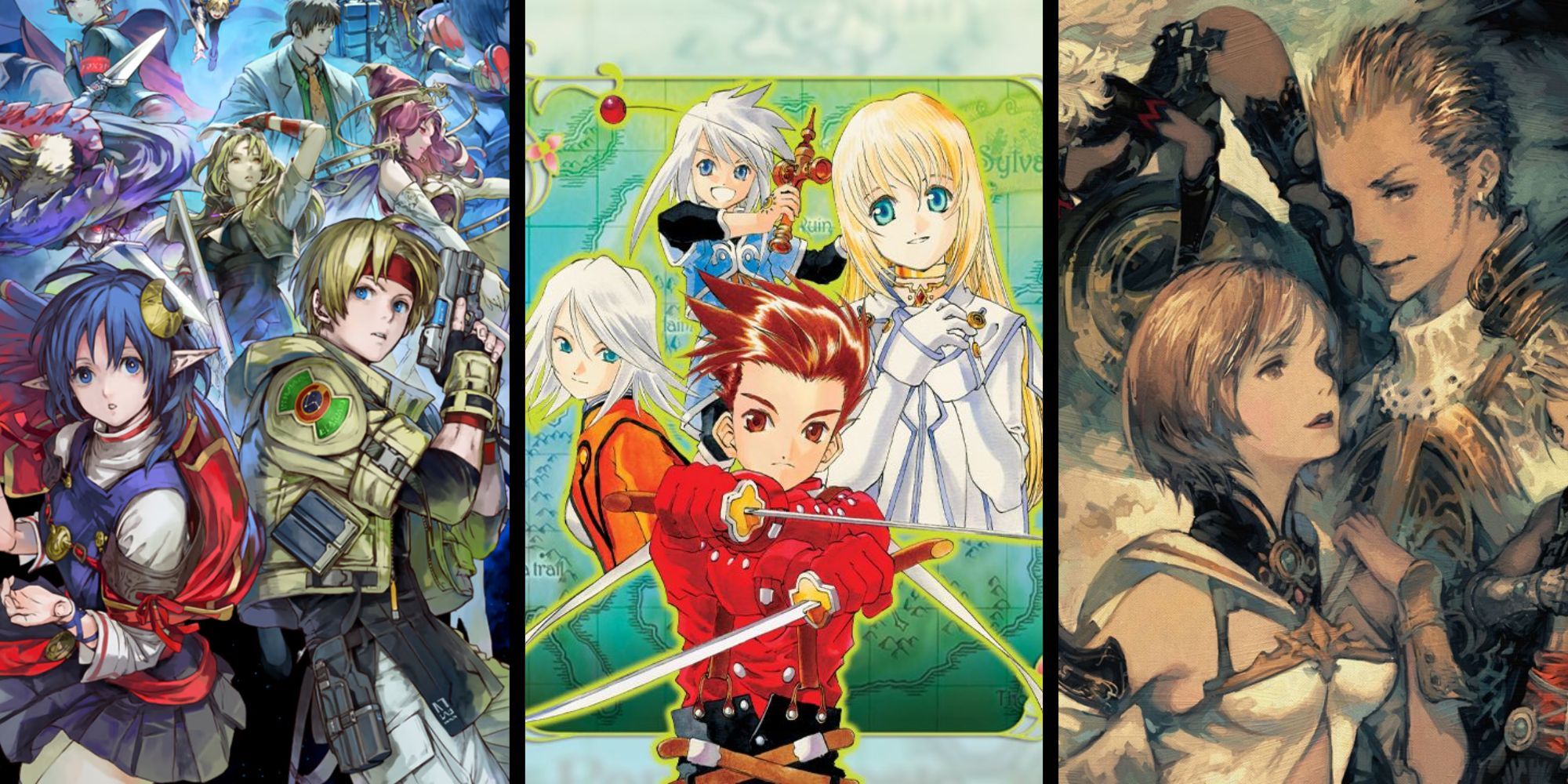
JRPGs are among the most famous and classic genres in the gaming world, including globally popular series like Final Fantasy, Dragon Quest, Persona, and others.
With such a rich history, it’s no surprise that many developers strive to launch their JRPG with a special twist, introducing unique mechanics.
Many of these mechanics modify the turn-based combat typical of JRPGs or add that extra flair to gameplay, transforming the game’s entire dynamic.
Some mechanics were highly successful and are still replicated in modern installments, while others have become nostalgic memories in JRPGs of yesteryears. But no matter whether old or new, we intend to show the coolest mechanics the genre has ever gifted us.
10 Legend of Legaia
The Arts Combo System

- Released
- October 16, 1998
- Developer
- Prokion, Contrail
- Publisher(s)
- Sony
- Publisher
- Engine
- prokion
- ESRB
- t
- How Long To Beat
- 37 hours
I feel like turn-based JRPGs started to innovate during the PS1 era, and Legend of Legaia was one of them. The combat system in Legend of Legaia presented a sort of combo model, where players could string together commands to unleash Arts in sequence and crush their enemies.
When attacking an enemy, you can choose four commands: up, down, left, or right. Depending on the order of selected commands, your characters unleash an Art, a more powerful attack ability than a standard strike. There’s a limited number of slots for each command that increases as the game progresses.
The best part about Legend of Legaia was trying to discover new Arts by combining different commands. It gave the sense that each battle was different from the last, and you didn’t have to rely on using the same repeated attacks.
Granted, you could look up a guide online and find the exact commands for all Arts, but for those who wanted to learn on their own, it added an extra layer of fun to the game. Legaia 2 kept the same system as its predecessor, though it wasn’t as successful.
9 Romancing SaGa 2
The Generational System

- Platform(s)
- PS Vita
- Released
- December 10, 1993
- Developer(s)
- Square Enix
- Publisher(s)
- Square Enix
- Engine
- Unity
- ESRB
- t
- OpenCritic Rating
- Fair
I have to admit, I started writing this entry while thinking of the Glimmer system in SaGa, a mechanic that allows you to learn new abilities in the heat of battle, which can often mean the difference between life and death.
While Glimmer is unique, it’s shared across the SaGa entries. However, Romancing SaGa 2 introduced a more distinctive mechanic, the generational system. This mechanic gets extra points when we remember the JRPG was released in 1993.

Related
8 JRPGs with Extensive End-Game Content
Prepare to invest as much, if not more, time in the end-game content as in the main campaign.
Romancing SaGa 2 isn’t afraid to kill off its characters… kind of. In the game, you play as the emperor of Avalon Castle and can explore the entire world to complete quests and annex territories into your kingdom. However, after a certain number of quests, many years pass—centuries, in fact—and, well, our protagonist dies of old age. This system also triggers if you die in battle.
You then have to choose an heir from a selection of all available classes. This character inherits all the abilities and power of the former emperor and can continue the crusade.
It’s a fantastic system because the passage of time affects various past events. For instance, if you saved a town from a troublesome pirate a couple of hundred years later, he might return as a ghost to haunt you.
8 Persona 3
Social Links
- Platform(s)
- PS3 , PS2 , PSP
- Released
- July 13, 2006
- Engine
- unreal engine 4
- ESRB
- M for Mature: Blood, Language, Partial Nudity, Violence
- How Long To Beat
- 80 Hours
- Metascore
- 86
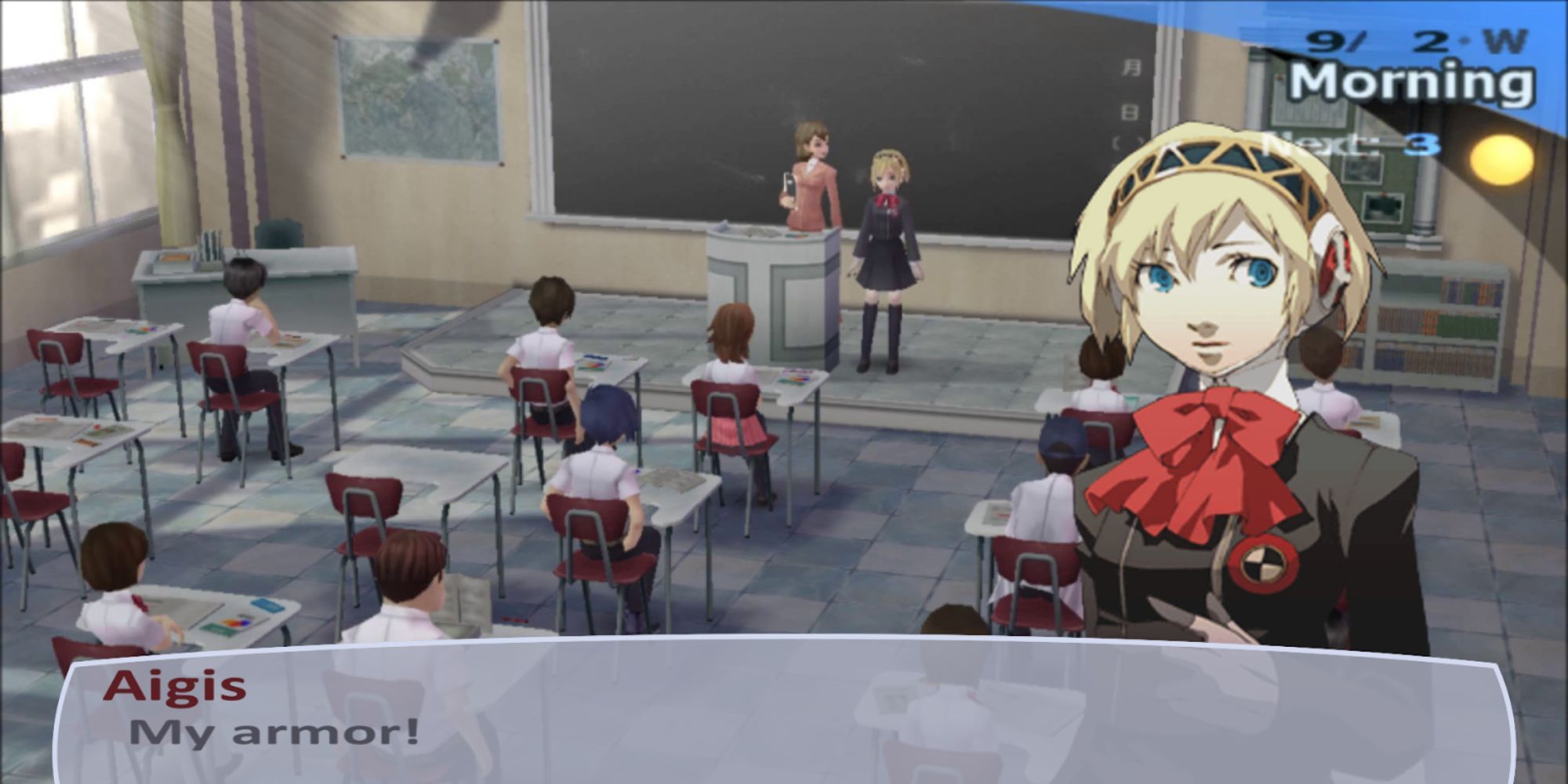
The Persona series is becoming increasingly mainstream, so the Social Link mechanic might not be as novel anymore. Nonetheless, it’s undoubtedly one of the most unique JRPG mechanics and one that players immediately recognize as an Atlus production.
Social Links—or Bonds in Metaphor: ReFantazio—is a mechanic where players can interact with NPCs and, depending on the interaction, increase their rank, which is essentially the affection the NPC feels for the protagonist.
Players gain various bonuses depending on the NPC’s rank while learning more about their personal lives, enriching the JRPG’s lore.
What’s interesting about Social Links is how they align perfectly with another Persona mechanic, the calendar. Since we have the sense that days are passing, each interaction feels more realistic than if we could simply farm them whenever we wanted. It’s up to the player to choose which NPC to invest time in, providing an organically familiar feeling.
7 Final Fantasy VIII
The Junction System

Love it or hate it, it’s hard to deny that Final Fantasy VIII’s Junction System was anything but unique. It’s also true that the Junction System isn’t as beloved because of another system tied to it: Draw.
But I digress. In Final Fantasy VIII, we strengthen our characters by equipping them with Guardian Forces and magic. Depending on the equipped Guardian Force, they provide a slot for one of the character’s stats, which can then be filled with magic to enhance that stat significantly.
For example, a Guardian Force might open a slot to enhance a character’s HP. If we place the Cure magic in that slot, the character’s HP increases. However, to get magic, we must use the Draw system in battle and slowly, painstakingly accumulate more spells.
This is because Final Fantasy VIII doesn’t have MP. The magic here works like items with a cap of 100. The more magic stored in a character, the higher their stats.
Consequently, if we use magic in battle, that attribute decreases. The system’s creator, Hiroyuki Ito, acknowledges that the system could be improved and has expressed a desire to refine it someday.
6 Tales of Symphonia
The Skits Mechanic

Tales of is one of those JRPG series that consistently delivers a spectacular cast of characters, and a big reason for that is its Skit mechanic. This feature was first introduced in Tales of Destiny, but Tales of Symphonia truly popularized it.
At certain moments, you get to witness character banter on a wide range of topics. Sometimes, it’s serious stuff related to the game’s story; other times, it’s lighter, like food preferences or some quirky trait of a character.
It’s a fantastic mechanic for building up characters in the Tales of series, and because it’s optional, it doesn’t disrupt the main story.
Skits have evolved over the years, now always featuring some voice acting, and in recent games like Tales of Arise, they come with a more dynamic design.
5 Suikoden
Town Building

Before Suikoden, other JRPGs included town-building mechanics, but Konami’s classic deserves special mention for offering 108 recruitable characters in each game, all contributing to the town’s growth.
This town-building system motivates players to hunt for new party members throughout the Suikoden games. At first, you start with a humble town with few facilities. But as you recruit a blacksmith, a cook, a sauna owner, and other varied members, the town gradually grows into a full-fledged castle.
It’s a mechanic that really pushes players to find new recruits, especially since many of them become party members in battle. Recruiting all 108 is essential for seeing the true ending in any Suikoden title.
4 Final Fantasy XII
The Gambit System

Final Fantasy XII broke away from traditional turn-based battles and went for something more real-time, though the ADB—Active Dimension Battle—still had a touch of turn-based mechanics. Characters selected a command, and a bar needed to fill before executing it.
To optimize the combat, Final Fantasy XII introduced the Gambit system, which automates various actions based on a range of conditions. You could set up attack gambits, like commanding someone to cast Fire if the enemy is weak to it, or support gambits to cast Cure on an ally below 30% HP.
Gambits can make Final Fantasy XII’s battles nearly automatic, depending on how well you fine-tune them. But unlike other games that entirely automate combat, a well-optimized setup in FFXII feels rewarding because your careful planning was responsible for that well-earned victory.
3 Wild Arms 4
The HEX Battle System

- Released
- April 30, 1997
- Publisher(s)
- Sony Computer Entertainment
- Engine
- Syrup Emulation Engine
- ESRB
- E For Everyone Due To Animated Violence
- How Long To Beat
- 30 Hours
I first thought of writing about Wild Arms for its exploration mechanics involving tools and puzzles—a rare feature in JRPGs—but I remembered Wild Arms 4 and 5’s unique HEX battle system, a turn-based setup based on hexagons.
The HEX system, short for Hyper Evolve X-fire sequence (though honestly, just an acronym for hexagon), consists of seven hexagonal spaces within the battlefield. Each of these can hold enemies or allies, and you can move freely between them as long as the opposition does not occupy them.
Depending on the attack, your character might only hit an adjacent hex or multiple hexes if it’s an area-of-effect attack. This battle system creates a different dynamic from traditional JRPG combat, making positioning important, whether to avoid enemy AoE attacks or line them up so your ARM’s shots can hit all of them in a straight line.
2 Star Ocean: The Second Story R
The Specialties System

One of the most significant innovations Star Ocean brought to JRPGs was its Skills and Specialties system.
It varies between mainline games, but in Star Ocean: The Second Story R, every level gives you points to invest in Skills, which can increase stats, provide combat bonuses, or grant other varied benefits.
However, depending on the skills you level up, your character might learn a Specialty like Blacksmithing, Cooking, Alchemy, or even Pickpocketing. These specialties completely shift the gameplay depending on how you approach them.
Speedrunners love using a mix of Alchemy and Blacksmithing to create powerful weapons early on and summon high-level monsters with Music to level up faster.
Then there’s Pickpocketing, which lets you steal items from every NPC in Star Ocean: The Second Story R. But doing so comes at a cost: your relationship with party members might suffer, potentially leading to a less happy ending than if you’d been a more upstanding citizen.
1 Xenoblade Chronicles
The Affinity Chart

- Platform(s)
- Switch
- Released
- May 29, 2020
- Publisher(s)
- Nintendo
- Engine
- XC2/Torna
- ESRB
- T For Teen Due To Blood, Mild Language, Partial Nudity, Use of Alcohol and Tobacco, Violence
- How Long To Beat
- 58 Hours
- OpenCritic Rating
- Mighty
- Metascore
- 89
JRPGs often let players build affinity with characters, but Xenoblade took this to a new level. In Xenoblade Chronicles, there’s a system called the Affinity Chart, which tracks relationships between the party and all the game’s regions and NPCs and between party members.
Raising affinity with NPCs changes their relationship with the group and even affects their relationships with other NPCs, all of which can be seen on the Affinity Chart.
For instance, you might see one NPC view another as friendly, but depending on your quest choices, that friendship could turn into animosity overnight.
Increasing affinity with a region unlocks more quests, new items for sale, and other bonuses, while party member affinity boosts the number of skills you can link, Chain Link chances, and duration while crafting Gems. In other words, being kind to everyone in Xenoblade Chronicles pays off.

Related
10 Best Indie JRPGs You Need To Play
Craving for another JRPG to consume your life? Check out this list of the best the indie world has to offer!
