
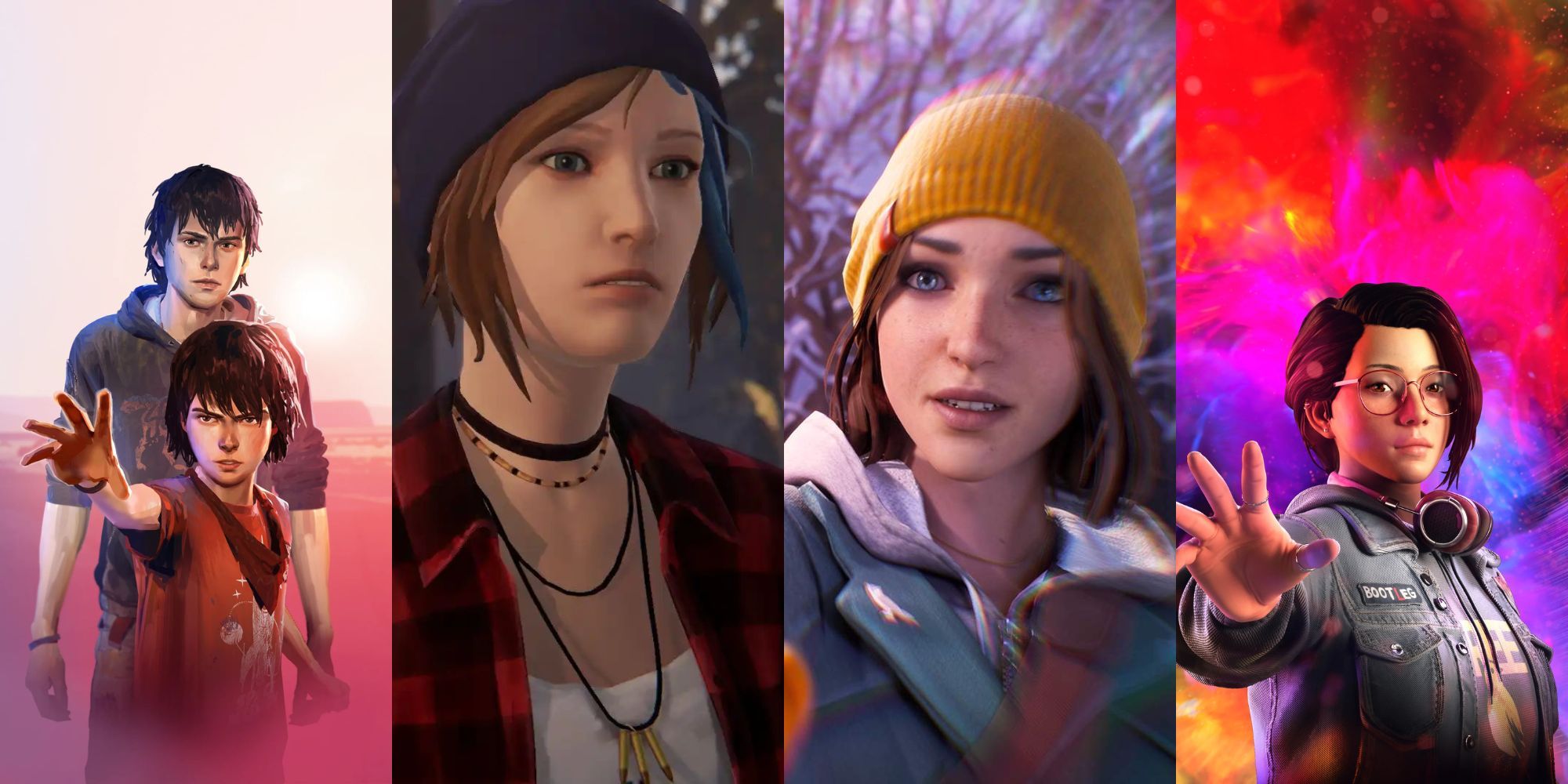
With Life is Strange: Double Exposure as the newest addition to the Life is Strange franchise, Square Enix has once again given the gaming community an enjoyable narrative and well-written characters complete with supernatural phenomena and head-scratching dilemmas.
Each entry in the Life is Strange franchise is beloved for its painterly rendering of realistic characters and grounded settings where major choices can butterfly effect into potentially world-ending catastrophes. You know, like Arcadia Bay.
Most Life is Strange games have self-contained stories with unique standalone casts, so playing them in chronological order isn’t necessary unless the game is a direct prequel or sequel.
Of course, each Life is Strange game has its ups and downs, but how do they measure against each other?
Warning: Minor Spoilers Ahead!
RELATED
What Order Should You Play Life Is Strange?
Are you confused because of prequels, sequels, and unnumbered titles? Here is the best order to play the installments of Life is Strange.
6 The Awesome Adventures of Captain Spirit
A Depressingly Short Spin-Off

The Awesome Adventures of Captain Spirit is a short, standalone story adjacent to Sean and Daniel’s, as it explores a day in the life of Chris, a young, imaginative boy who imagines himself as the titular superhero Captain Spirit.
It’s an uplifting game with a charming narrative that is unafraid to be unserious, giving you a child’s perspective.
And like every Life is Strange narrative, there’s always a heavier, darker side to the story, as Chris escapes the depressing reality of his father struggling with grief.
The game is only a couple hours long, and doesn’t cost a thing to check out if you’re curious about the Life is Strange series.
5 Life Is Strange 2
Nothing Can Stand Between These Brothers

The first Life is Strange game, and its subsequent prequel set a new bar for the rest of the series, so when Life is Strange 2 released in 2018, it’s unsurprising that a lot of people were a little disappointed that it didn’t feature Max and her paramour Chloe after the destruction of Arcadia Bay.
Instead of a small-town story that slowly unfurls into a murder mystery, Life is Strange 2 deviates from its predecessors by setting itself up as a thriller.
It tells the story of Sean Diaz and his brother Daniel, as they run away from authorities and a cult after an accident due to Daniel’s latent telekinetic powers.
As befitting of Life is Strange‘s strong storytelling, this sequel focuses more on the commentary about being a person of color in America in the 21st century, which forces the player to face uncomfortable situations that can happen in real life.
While Life is Strange 2 had more mixed receptions than its predecessors; I can’t help but admire its boldness in trying to explore heavier themes and drawing more from political commentary.
4 Life Is Strange: True Colors
Literally The “Me, An Empath” Meme

Life Is Strange: True Colors scales back to a slower pace set in another small town. Its protagonist, Alex Chen, is an empath, but with the supernatural twist that she sees emotions as auras and can take on those emotions as her own.
You can tell the game feels and looks different because it wasn’t developed by Don’t Nod but rather Deck Nine, who worked on Before the Storm and later, Double Exposure.
Unlike its peers, True Colors also launched with the full game available, deviating from the typical episodic drop that Life is Strange games are known for.
Empathy, however, is a strange power set for a Life is Strange protagonist to have, and feels much more muted than we would expect. Still, it’s fun and refreshing, and it’s clear that Deck Nine paid close attention to every detail they put in the game. Its stakes are rather low, and there is even a LARPing subplot in the middle of the game.
3 Life Is Strange: Double Exposure
Max Is Back, Baby

It’s been nearly a decade since the first game, and Max is finally back in full force as the main protagonist. As a much-anticipated entry to the series, Double Exposure tells the story of a murder mystery in the university where Max works, and she discovers that her rewind powers have been replaced with one that allows her to access parallel realities.
Max’s new powers open up a lot of creative ways to solve the game’s puzzles, and most of its characters are charming to boot (besides Lucas). Max’s return also means that we get to appreciate Hannah Telle’s charming performance of Max’s cringey one-liners (wowsers).
I must admit: I’m a little biased on this one because Max is one of my favorite game protagonists, but my bias can only take it so far.

RELATED
Life Is Strange: Double Exposure Review
The bizarre adventures of Mad Max return
2 Life Is Strange: Before The Storm
The Prequel Fans Wanted And Deserved

Graphic Adventure
Interactive Narrative
Mystery


- Released
- August 31, 2017
- Publisher(s)
- Square Enix
- Engine
- Unity
- ESRB
- M for Mature // Blood, Sexual Themes, Strong Language, Use of Drugs and Alcohol, Violence
- How Long To Beat
- 10 Hours
- OpenCritic Rating
- Strong
- PS Plus Availability
- Extra & Premium
- How Long To Beat (Completionist Runs)
- 13 Hours
After the blazing success of the first Life is Strange game, we get a prequel spin-off featuring Chloe Price in Before the Storm, with a much-needed story about the late, enigmatic Rachel Amber.
Due to the Voice Actor’s Guild strike at the time, Ashly Burch could not reprise her role as Chloe, so instead, we had Rhianna DeVries as the angsty teenage punk.
What sets Before the Storm apart is that the story has very few supernatural elements: no Max, no rewind powers, and no storm (hence the title). Instead of using any special powers to solve the game’s problems, the game has the “Backtalk” mechanic, where Chloe annoys people into submission, perfectly capturing her edgy teenage angst.
But Chloe’s issues don’t distract from the storytelling too much. Her budding relationship with Rachel Amber gives a lot of context for the first Life is Strange game, setting up the corruption plaguing Arcadia Bay.
With only three episodes, Before the Storm also feels a little bit less consequential in its stakes than the other games, including a bonus episode, “Farewell,” featuring Ashly Burch and Hannah Telle reprising their roles.
1 Life Is Strange
Can’t Beat The Original

Now we’re coming up to the original game. The 2015 game introduces the Life is Strange trademarks that we all know and love: consequential choices, supernatural elements, and character-driven narratives.
The story revolves around Max Caulfield, a photography student at Blackwell Academy in Arcadia Bay, Oregon. She watches her old childhood friend Chloe gunned down and inadvertently unlocks a latent power to rewind time, kicking off a complex narrative with serial murders, corruption, and impending disasters.
The penultimate decision forces Max to choose either to sacrifice Chloe or all of Arcadia Bay.Probably one of the toughest decisions to make.
The messaging behind Life is Strange is powerful, balancing sensitive social issues while tackling emotional messaging about one’s inability to let go of the past.
Each episode contains a strong narrative, and Chloe really grows on you as a person as you discover Arcadia Bay’s dark secrets together. A lot of fans (including myself) still regard the first Life is Strange as the best in the series.

NEXT
Life Is Strange: 10 Best Characters In The Series, Ranked
Life is strange, but these great characters make it all that much easier to handle.
