

Developing Countries Benefit From Carbon Credits
A carbon credit represents the reduction in a tonne of CO2-equivalent emissions that is achieved through a project, such as renewable energy farms or measures to reduce fossil fuel use in industrial plants. It is traded in a market alongside other financial instruments such as shares, bonds or swaps, and can be used by companies and nations to offset their own emissions, or for compliance with emission-reduction targets under global climate agreements or national regulations.
Emissions are measured by tracking the flow of carbon dioxide (CO2) into and out of the atmosphere using atmospheric monitoring stations. The avoided or removed emissions are then compared with the hypothetical (‘baseline’) scenario that would have taken place in the absence of the project, such as burning more fossil fuels or cutting down more trees. Most credits sold today are for reductions, with the rest for carbon capture and storage – either natural solutions like planting trees on new or existing forests (known as afforestation or reforestation) or technological ones such as direct air capture.
Companies around the world are committing to net-zero emissions, sometimes through regulation and often voluntarily. They will need a range of tools to help them get there, including carbon markets. While a carbon market is not the only way to achieve net-zero emissions, it is an efficient mechanism for transferring investment towards those projects that will deliver the most emissions reductions. In the case of carbon.credit, it also helps to drive up standards and promote best practices in carbon reduction.
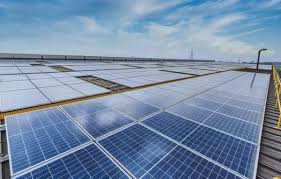
How Do Developing Countries Benefit From Carbon Credits?
The Bank is working to build more robust, liquid and transparent carbon markets that are aligned with the Paris Agreement. Its approach goes beyond carbon trading, including supporting countries to scale up their climate action and support more ambitious emissions cuts.
Carbon markets are a central part of the international effort to mitigate climate change and reduce the risks to people, economies and ecosystems from warming. They are based on the principle that entities will generate and sell carbon credits (also called allowances or certificates) representing their emissions reduction projects to other entities, often developed countries seeking to meet their own climate goals or offset their own emissions.
Governments or their designated regulatory agencies typically issue the credits, but they can be issued by a wide range of institutions, including non-governmental organisations and financial firms. These can include companies, banks, investors and even sovereign wealth funds.
Currently there are several carbon markets operating globally. These include the Clean Development Mechanism (CDM), which was created under the Kyoto Protocol, and national and international programs such as the European Union Emissions Trading Scheme and California Cap and Trade.
These schemes allow businesses to buy and sell allowances or certificates that represent their emissions reduction efforts, which are verified by independent credit-rating systems. The Bank’s Roadmap outlines its ambition to work with others to develop solutions to expand these markets, while ensuring integrity principles are applied to both buyers and sellers of carbon credits and introducing common frameworks for organizations that validate and verify them.

