
PCB flex rigid boards improve performance
The seamless fusion of stiff and flexible substrates onto one board allows PCB flex rigid boards to bend, twist, and adapt to fit into small spaces or unique form factors without compromising performance. They are ideal for a wide variety of applications in sectors like medical technology, military missile guidance systems, cameras and video cameras, aerospace equipment, and automotive and robotics where compactness, robustness, and durability are essential.
To ensure the reliability of PCB flex rigid boards, manufacturers must carefully plan their designs and construction to maximize the benefits they offer. This means making design choices that increase flexibility and allow the board to withstand mechanical stress, reducing signal loss, maintaining impedance control, and managing thermal expansion. In addition, careful inspection and testing must be carried out to ensure the quality of a rigid flex circuit board.
pcb flex rigid improve performance by eliminating many of the sources of premature circuit failure, including board-to-board connections, solder joints, and vibration and shock. By replacing multiple connectors and wire harnesses with a single rigid flex circuit board, they also reduce assembly costs. Rigid flex circuits can be more complex than traditional rigid or fully flexible circuits, so it’s important for designers to choose an experienced fabrication partner and work closely with them throughout the design process to achieve good manufacturability.
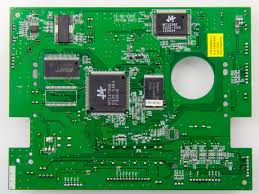
How do PCB flex rigid boards improve performance?
While rigid flex circuits are reliable in most environments, high-vibration applications can present their own challenges. Vibration can cause the PCB to flex and bend repeatedly, potentially leading to material fatigue and interconnect reliability issues. To protect against these risks, engineers can choose to reinforce the rigid flex with fiberglass and add copper layers to provide greater mechanical stability. In addition, choosing a polyimide with high thermal stability can help the circuit to withstand the effects of repetitive bending and temperature changes.
When selecting a design for a rigid flex circuit, it’s important to plan the layout meticulously and use the latest manufacturing techniques to reduce the risk of failure. This includes using a thicker copper layer for the conductive paths and routing traces along smooth curves instead of abrupt angles to minimize cracking or damage. Also, ensuring the correct transition between rigid and flexible sections is vital to prevent signal integrity or electromagnetic interference (EMI) problems.
Flex-rigid PCBs represent a significant advancement in PCB design, offering a blend of flexibility, reliability, and performance. Their unique properties make them indispensable in industries that demand compact, high-performance, and durable electronic solutions. As technology progresses, the applications and capabilities of flex-rigid PCBs are expected to expand further, solidifying their role in the future of electronics.
Although the rigid flex PCB is an excellent solution for many applications, it’s not suitable for low-volume production or simple designs. Additionally, they may not be the best choice for circuits with high-frequency signals, high mechanical stress, or extreme temperatures due to the limitations of the flexible areas. If you’re working with tight budget constraints or want to explore alternative options, a fully flexible or traditional rigid PCB can be an excellent choice for your next project.
