
If you’re a new developer eager to build your bones and sharpen your skills, there’s no easier place to start than tower defense.
These games are easier to make than your open-world first-person shooters or city-builders because you only need three core elements—a path, enemies, and towers.
However, because the basics of tower defense requirements are so easy, there is a sea of monotonous and frankly pointless tower defense games.
If you want to develop a tower defense game that stands out in the crowded marketplace, you have to think off the beaten path.
Related
10 Best Tower Defense Games, Ranked
If you want to find the best tower defense games, this list can help!
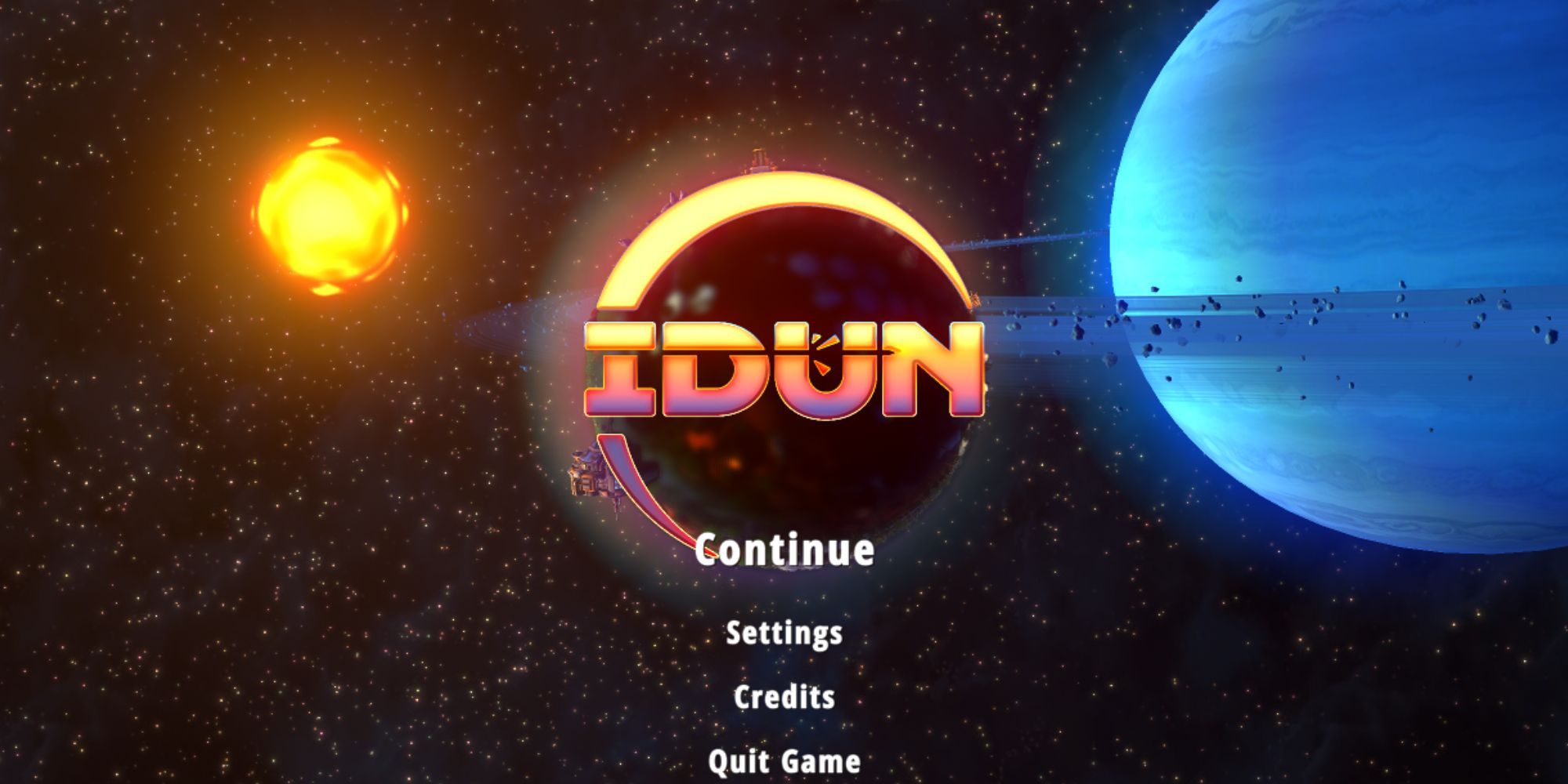
IDUN – Frontline Survival aims to be one of the more innovative tower defense titles. It wants to be seen as unique, a trailblazer, a clever combination of tower defense and real-time strategy.
It wants to stand alongside icons of the genre like Sanctum and Kingdom Rush, but is that too much for a small first-time developer to hope for? Is IDUN shooting too far, or can it hit the narrow target required to be a memorable tower defense experience?
IDUN ticks the core boxes—paths, enemies, and towers—but Bloons TD6 and The Riftbreaker needn’t shake in their boots—yet.
A Strong Foundation with Strategic Twists

IDUN ticks all the essential tower defense boxes—paths, enemies, towers—but then it flips the script just enough to keep you on your toes. Unlike games like Kingdom Rush, you won’t find neatly marked paths here. Instead, the map’s natural features nudge you toward where enemies might show up.
Just when you think you’ve got their route figured out, they change direction. Sitting back and coasting through a mission is not possible here.

The enemies, or vermin, are relentless chaos machines with distinct quirks. Hot vermin are speed demons that go down quickly. Cold vermin are slow as molasses but built like tanks and take more of a beating.
Picking the right towers and weapons to counter these nuisances is a satisfying puzzle—until you’re swarmed from every direction and strategy takes a backseat to pure survival instincts.

Related
Bloons Tower Defense 6: 10 Best Heroes, Ranked
Bloons TD 6 gives players several amazing heroes to choose from, but these are some of the best ones you should look forward to obtaining.
One standout mechanic is the ability to move towers during a mission. There’s no penalty for repositioning, and some power-ups let your towers unleash a shockwave when moved, turning a quick adjustment into an offensive maneuver.
It’s a clever twist that brings a splash of real-time strategy into the mix, fulfilling one of the developer’s original goals for the game when it was still designed as a mobile title.

And then there’s the sky gun. A player-controlled weapon with infinite ammo but a slow reload time, it’s all about timing your shots perfectly.
Juggling tower placements while aiming the sky gun can get overwhelming, but pulling it is endlessly satisfying. There’s nothing quite like finishing off a level with a barrage of bullets raining from the heavens.
A Discordant Din

From the very first piece of dialogue, IDUN shows off its characters’ personalities. These aren’t your run-of-the-mill heroes—they bicker, banter, and occasionally charm their way through the light narrative.
On paper, this should bring the story to life, but in practice, the sound design trips over itself so often that it drags the whole experience down.
In a game that hinges on split-second decisions and clear communication, bad sound design is a dealbreaker.
The dialogue is riddled with technical issues. Lines overlap in a chaotic jumble, subtitles rarely match what’s being said, and sometimes, there’s an awkward delay that leaves a character talking while another’s lips are moving.
Even worse, nothing changes between replays or difficulty levels, so you’re stuck hearing the same quips, hints, and exclamations again and again. What starts as a highlight quickly becomes a test of patience.

Related
10 Amazing Indie Game Soundtracks
Whether you are looking for chiptunes, synth, or something utterly unexpected, indie games have you covered for music.
In a game that hinges on split-second decisions and clear communication, bad sound design is a dealbreaker. And that’s frustrating because the writing itself has real potential, and the game has intensely satisfying ambient sounds.
The characters are distinct, their relationships are layered, and their interactions could elevate the experience. But until the technical side catches up, you’re left watching a brilliant play with the sound system on the fritz.
A Dynamic Path to Progression

IDUN takes a more thoughtful approach to progression than most of its peers. Instead of dumping new characters and tools into a menu for you to click and equip, it ties them directly into the gameplay.
Want a particular hero on your roster? You’ll have to rescue them first. This design choice makes every unlock feel meaningful and earned, tying character development seamlessly into the narrative.

Towers follow a similar pattern. Before you can add a new one to your loadout, you’ll see it in action during a mission. It’s a clever way to let you test-drive your tools before they’re officially yours.
The map evolves, too, as you progress. What starts as two clusters of seven hexagons transitions into smaller, individual missions scattered across the planet. It’s a smart shift—just when the campaign looks like it might wrap up, it expands into something more intricate, keeping the gameplay fresh even if other elements don’t hold up as well.
One And Done

Replayability is where IDUN trips over its own feet. With only three difficulty levels, the experience doesn’t change much between replays. Each difficulty starts the same, only asking you to survive longer and rewarding you with slightly better loot. That’s it.
On the planet of IDUN, the lack of variation makes replaying missions feel more like a chore than a challenge.
Compare that to something like Bloons TD6, which thrives on endless difficulty modes, dynamic challenges, and unique hero runs that fundamentally change how you approach the same map.
Fortnite derives success from frequent and exciting map changes; tower defense games rely on features and mechanics that make the same set of maps more exciting.
On the planet of IDUN, the lack of variation makes replaying missions feel more like a chore than a challenge. Once you’ve beaten a level, there’s not much incentive to go back.
An Identity Crisis

IDUN balances charm and practicality with its visuals, but the overall aesthetic leans a little too much into mobile game territory. After playing the game, I researched the developer and found that the earliest iteration of this game was called Planetfall and that it was indeed meant to be an Android experience.
Unfortunately, the graphics in the earliest developer walkthrough are near-identical to the finished product now on Steam.
The low-poly 3D environments and 2D character designs are clean, functional, and deceptively polished. Subtle touches—that you’ll likely only notice with experience in 3D asset creation—like bevels, normal maps, and light sculpting—show care and attention to detail. But when you’re on the planet view, the game starts to resemble something like Solar Smash.
It’s not bad, but it can feel underwhelming on a bigger screen.

That said, the environments themselves work well for a tower defense game. Each level sets a distinct tone, whether it’s molten lava flows or an eerie alien mining site.
The low-poly enemies and simple layouts look good, and they keep the game running smoothly, even when the screen is packed with swarming vermin.
IDUN doesn’t need cutting-edge visuals to draw you in; it looks good enough to keep you immersed without ever overwhelming you.
IDUN – Frontline Survival definitely has its moments, with smart twists on classic tower defense mechanics and a fresh take on progression. The ability to move towers on the fly and the unique vermin enemy types keep things interesting, but the game falls short in a few key areas. Sound design issues and a lack of real replayability make it hard to stay fully engaged. The visuals, while functional, have a mobile game feel that doesn’t quite match up to the experience. It’s a promising effort, though, and with some fine-tuning, IDUN could really hit its stride. For now, it’s a fun but flawed ride.

Next
12 Best RTS Games Of All Time, Ranked
Real-Time Strategy games have gone out of style somewhat, but RTS games are timeless. This list delves into the best the genre has to offer.

IDUN – Frontline Survival
Reviewed on PC
- Released
- January 20, 2025
- Developer(s)
- IDUN Interactive
- Publisher(s)
- Surefire Games
- Innovative gameplay mechanics with movable towers and a unique sky gun feature
- The narrative introduces new characters and towers naturally as you advance
- Smooth performance on mid-range systems coupled with a clean, functional UI
- Repetitive dialogue across difficulty levels and mission replays
- Sound bugs and overlapping, missing, and discordant audio
- Limited replayability with a standard 3-tier difficulty for all levels
