

commonly encountered in Flexible printed circuit
Flexible printed circuits (FPCs) represent a crucial component in the realm of modern electronics, offering a flexible substrate that enables the creation of intricate electronic designs in compact spaces. However, with the numerous benefits they provide, FPCs also come with their fair share of challenges. These challenges span various aspects of design, manufacturing, and application, influencing the performance and reliability of flexible circuits in diverse applications.
One of the primary challenges encountered in flexible printed circuits is their susceptibility to mechanical stress. Unlike rigid PCBs, FPCs are designed to bend and flex, making them ideal for applications where traditional rigid boards would be impractical. However, this flexibility also renders them vulnerable to damage from repeated bending, twisting, or flexing beyond their intended limits. Over time, this can lead to the degradation of the conductive traces, insulation layers, and other components, ultimately compromising the reliability of the circuit.
Another significant challenge in flexible printed circuit is maintaining consistent electrical performance across the flexible substrate. Variations in material properties, such as dielectric constant and thickness, can impact signal integrity, impedance matching, and overall electrical performance. Ensuring uniformity in these properties throughout the FPC is essential for reliable operation, especially in high-speed and high-frequency applications where signal integrity is critical. Achieving this consistency requires meticulous control over the manufacturing processes and materials used in FPC fabrication.
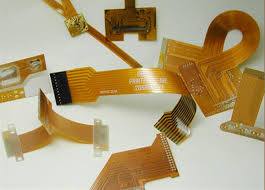
What challenges are commonly encountered in Flexible printed circuit?
Reliability in harsh environments poses yet another challenge for flexible printed circuits. Unlike traditional PCBs housed in rigid enclosures, FPCs are often exposed to a range of environmental factors, including temperature extremes, moisture, vibration, and mechanical shock. These conditions can accelerate material degradation, promote corrosion, and compromise the integrity of solder joints and interconnects. Designing FPCs to withstand such harsh environments requires careful selection of materials, protective coatings, and encapsulation techniques to ensure long-term reliability.
Interconnection reliability is a common challenge in FPCs, particularly concerning the attachment of components and connectors to the flexible substrate. The repeated flexing and bending of the circuit can place strain on these interconnections, leading to fatigue failure over time. Additionally, the small form factor of FPCs can make it challenging to achieve robust and reliable connections, especially in applications where space is limited. Employing advanced bonding techniques, such as flip-chip bonding and laser direct structuring, can help enhance the durability and reliability of interconnections in FPCs.
Maintaining dimensional stability is crucial for the proper functioning of flexible printed circuits. Unlike rigid PCBs, FPCs can undergo dimensional changes when subjected to temperature variations or mechanical stress. These changes can affect the alignment of components, impedance matching, and overall performance of the circuit. Minimizing dimensional variations requires careful selection of materials with low thermal expansion coefficients and implementing design strategies to mitigate the effects of mechanical stress on the flexible substrate.
In conclusion, while flexible printed circuits offer numerous advantages in terms of flexibility, compactness, and lightweight design, they also present several challenges that must be addressed to ensure reliable performance in various applications. From mechanical stress and electrical consistency to reliability in harsh environments and interconnection integrity, overcoming these challenges requires a combination of advanced materials, meticulous design, and precise manufacturing techniques. By understanding and mitigating these challenges, engineers can harness the full potential of flexible printed circuits in the ever-evolving landscape of electronic design and innovation.

