
circuit board
A circuit board, also known as a printed circuit board (PCB), is an essential component in almost all electronic devices. It serves as the foundation for connecting and supporting electronic components, making it possible for devices to function properly. Circuit boards are found in everything from smartphones and computers to medical devices and home appliances. Understanding the basics of what a circuit board is and how it works is fundamental to comprehending modern electronics.
At its core, a circuit board is a flat, insulating board made from materials like fiberglass, resin, or other non-conductive materials. On this board, conductive pathways, often made of copper, are etched or printed. These copper pathways form electrical circuits that allow different components on the board to communicate and share electrical signals. The components are attached to the board, typically through soldering, a process where molten metal is used to fuse components to the copper traces on the board. Once everything is connected, the circuit board functions as the central hub for the device, facilitating the flow of electricity and ensuring all the electronic parts work together seamlessly.
Circuit boards come in various types, depending on their complexity and application. The most common type is the single-sided PCB, which has conductive copper traces on one side only. This type is generally used in simple devices. For more advanced applications, such as in computers or high-tech equipment, double-sided PCBs and multilayer PCBs are often used. Double-sided PCBs have conductive pathways on both sides of the board, allowing for more complex circuits. Multilayer PCBs, which can have several layers of conductive pathways sandwiched between insulating layers, offer even greater complexity and are ideal for high-performance devices requiring compact designs.
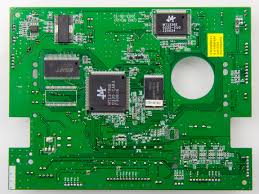
What is a circuit board?
The importance of circuit boards in modern electronics cannot be overstated. Before the invention of PCBs, electronic devices were made with point-to-point wiring, which was a labor-intensive and error-prone process. Circuit boards revolutionized electronics by making it easier to design, manufacture, and repair devices. PCBs also allowed for the miniaturization of electronic devices, paving the way for the development of smaller, more portable gadgets. Without the PCB, the advanced technology we rely on today, from mobile phones to advanced medical equipment, would not be possible.
One of the key benefits of circuit boards is that they ensure consistent and reliable electrical connections. Since the pathways are etched or printed with precision, the risk of loose or faulty connections is significantly reduced. This reliability is crucial in devices that require precision, such as medical instruments, aerospace technology, or telecommunications equipment. Additionally, PCBs make it easier to scale production because they can be mass-produced with consistent quality, reducing costs and improving efficiency.
In conclusion, circuit boards are the backbone of modern electronic devices. They provide a compact, reliable, and efficient way to connect and support electronic components. Whether in simple gadgets or highly sophisticated machines, circuit boards play a pivotal role in ensuring that electronic devices function properly. As technology continues to evolve, circuit boards will remain an indispensable part of the electronics industry, enabling innovation and driving the development of new, smarter devices.
